

Description
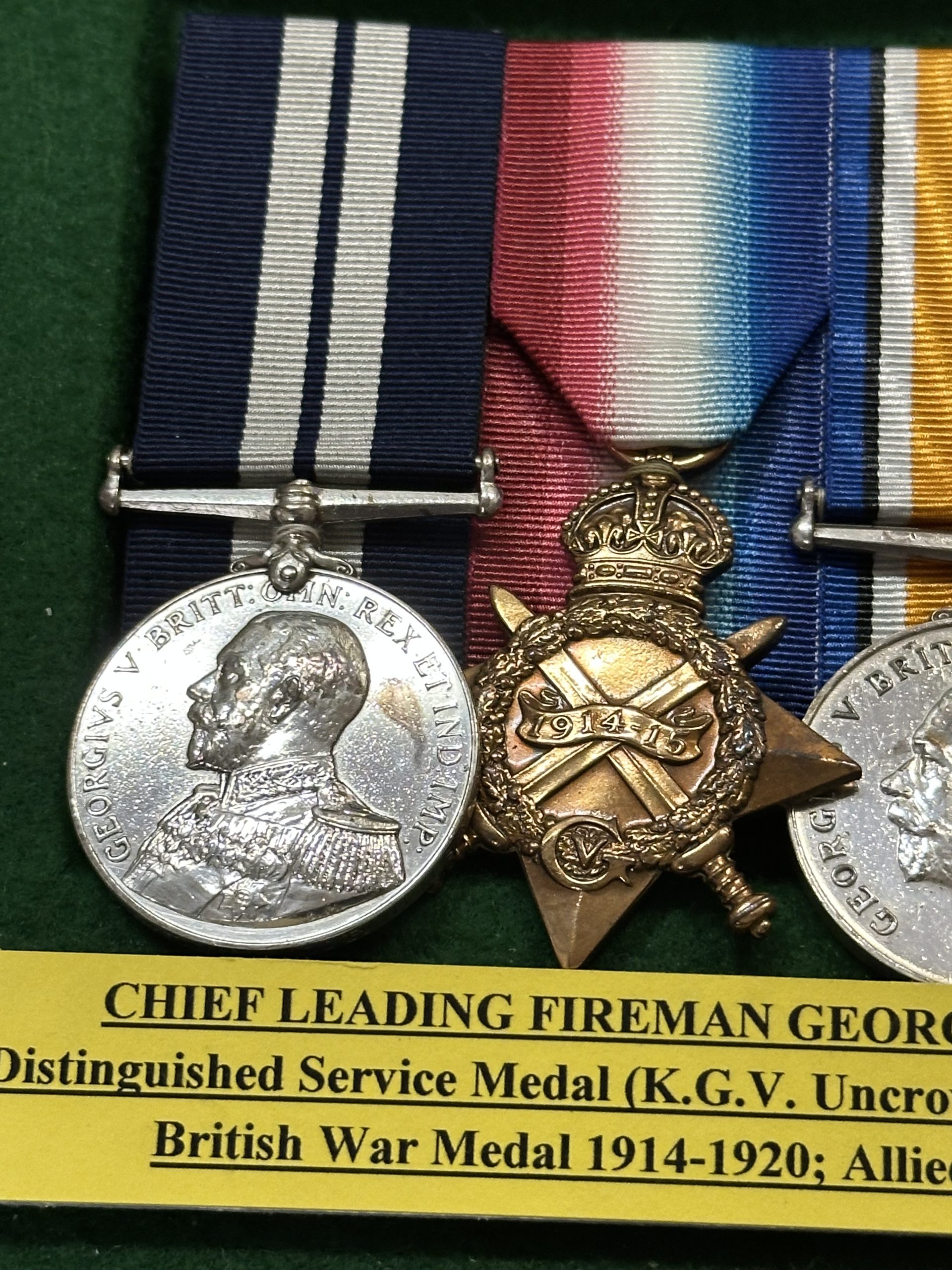
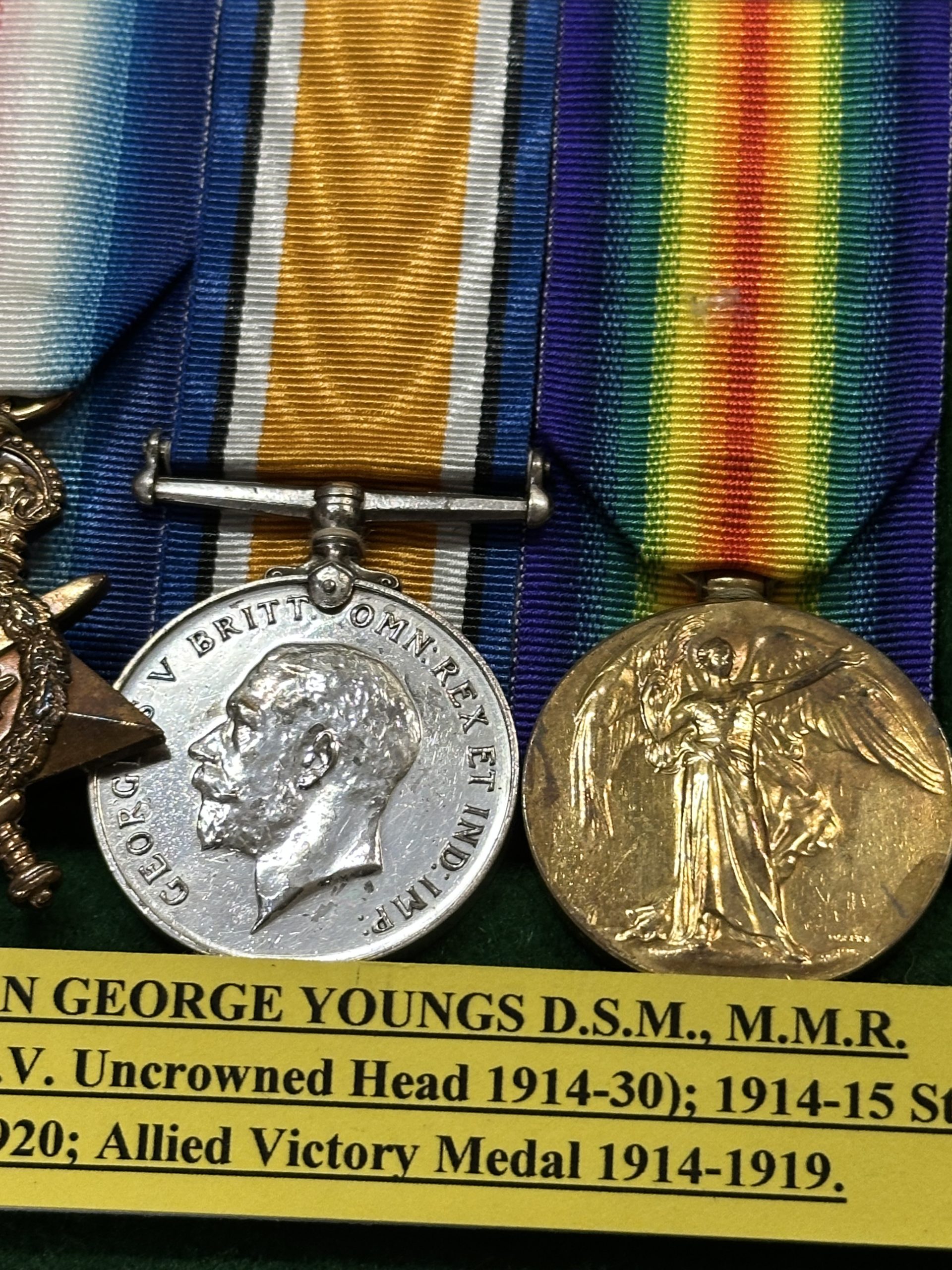
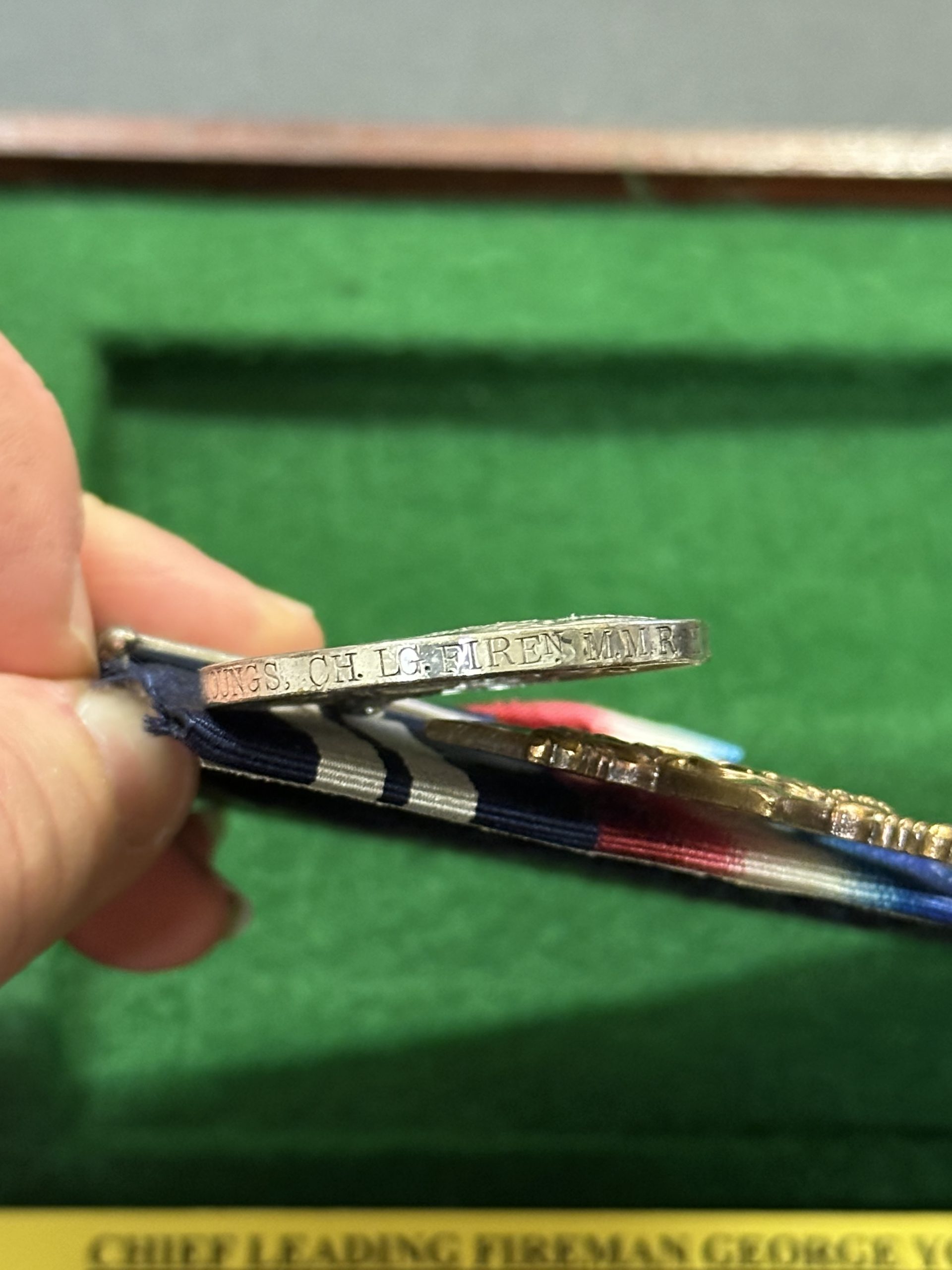
83466 Chief Leading Fireman George Youngs DSM MMR H.M.S. Mantua
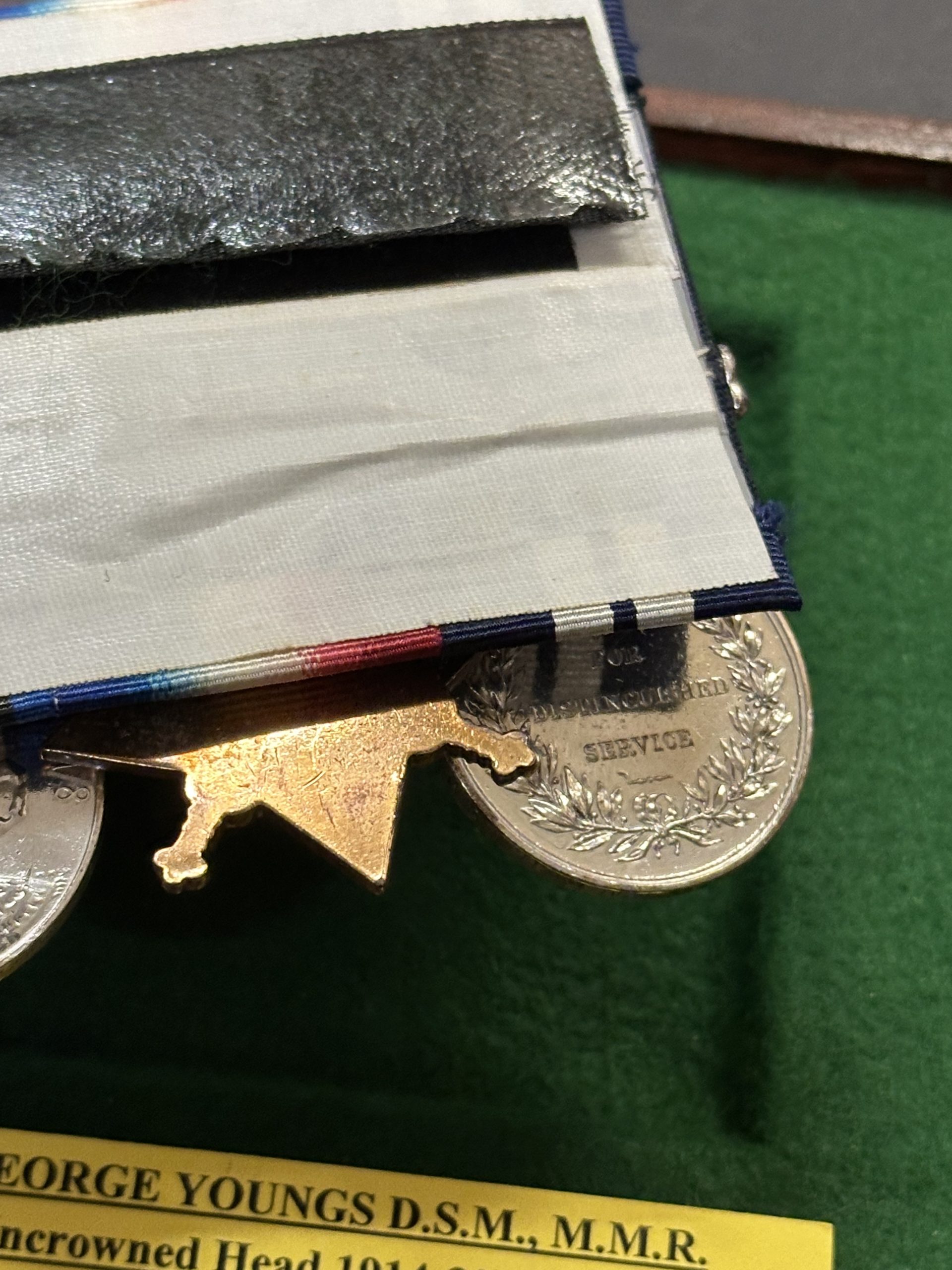
-Distinguished Service Medal George V (uncrowned) named G. Youngs CH LG FIRE N MMR. H.M.S. Mantua
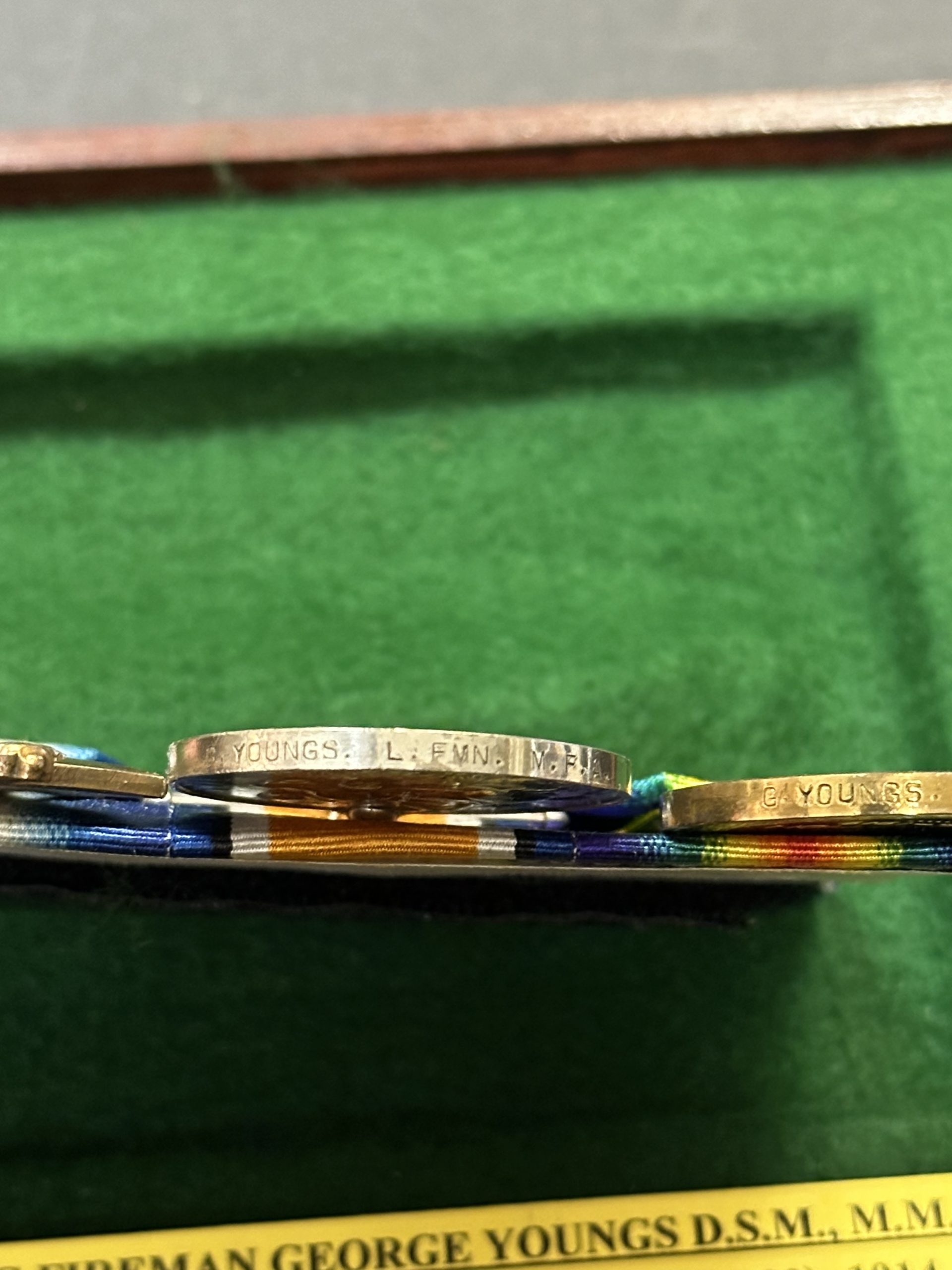
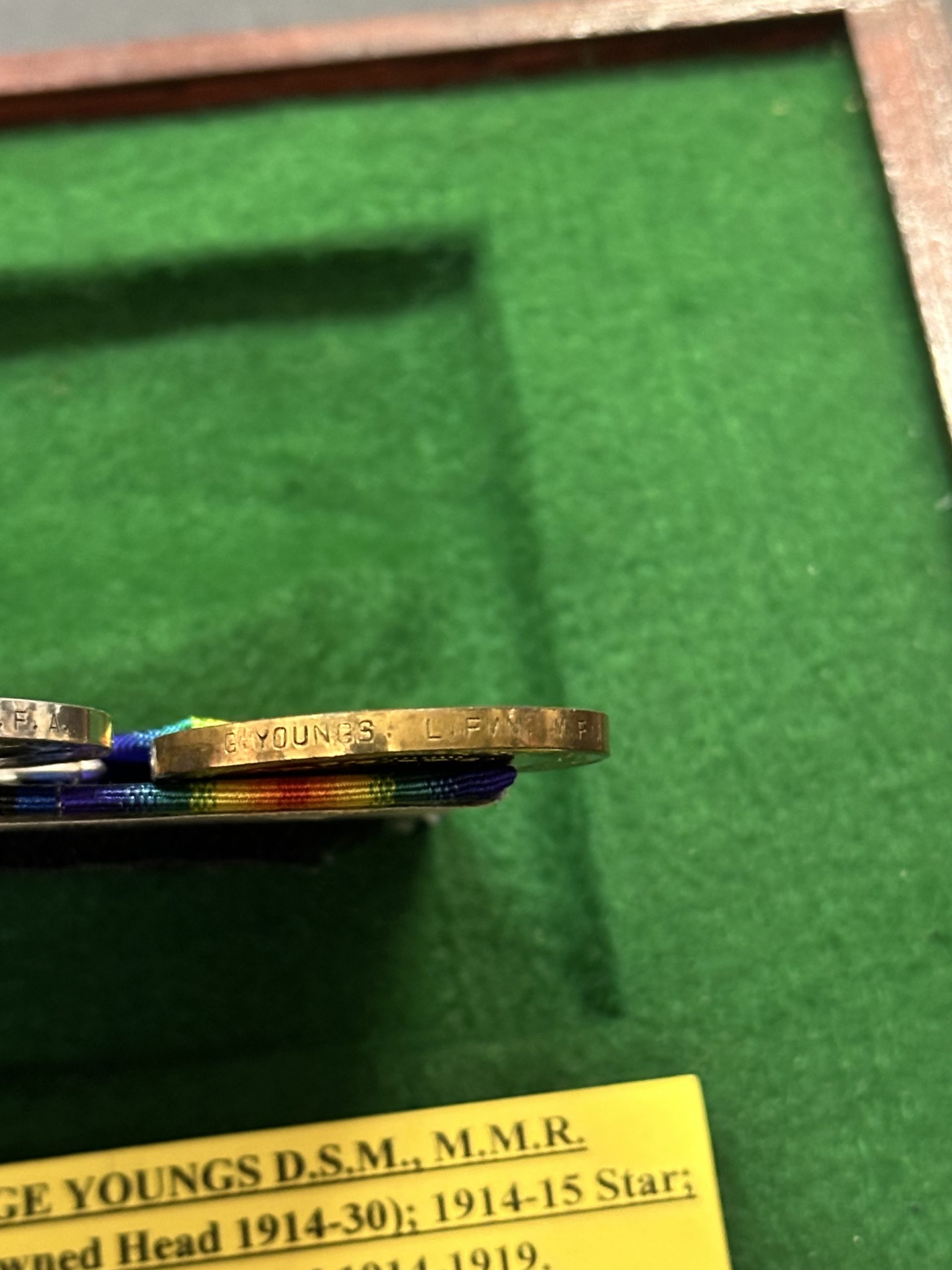
-1914-15 Star G Youngs FMN MFA
-WWI War Medal G Youngs L FMN MFA
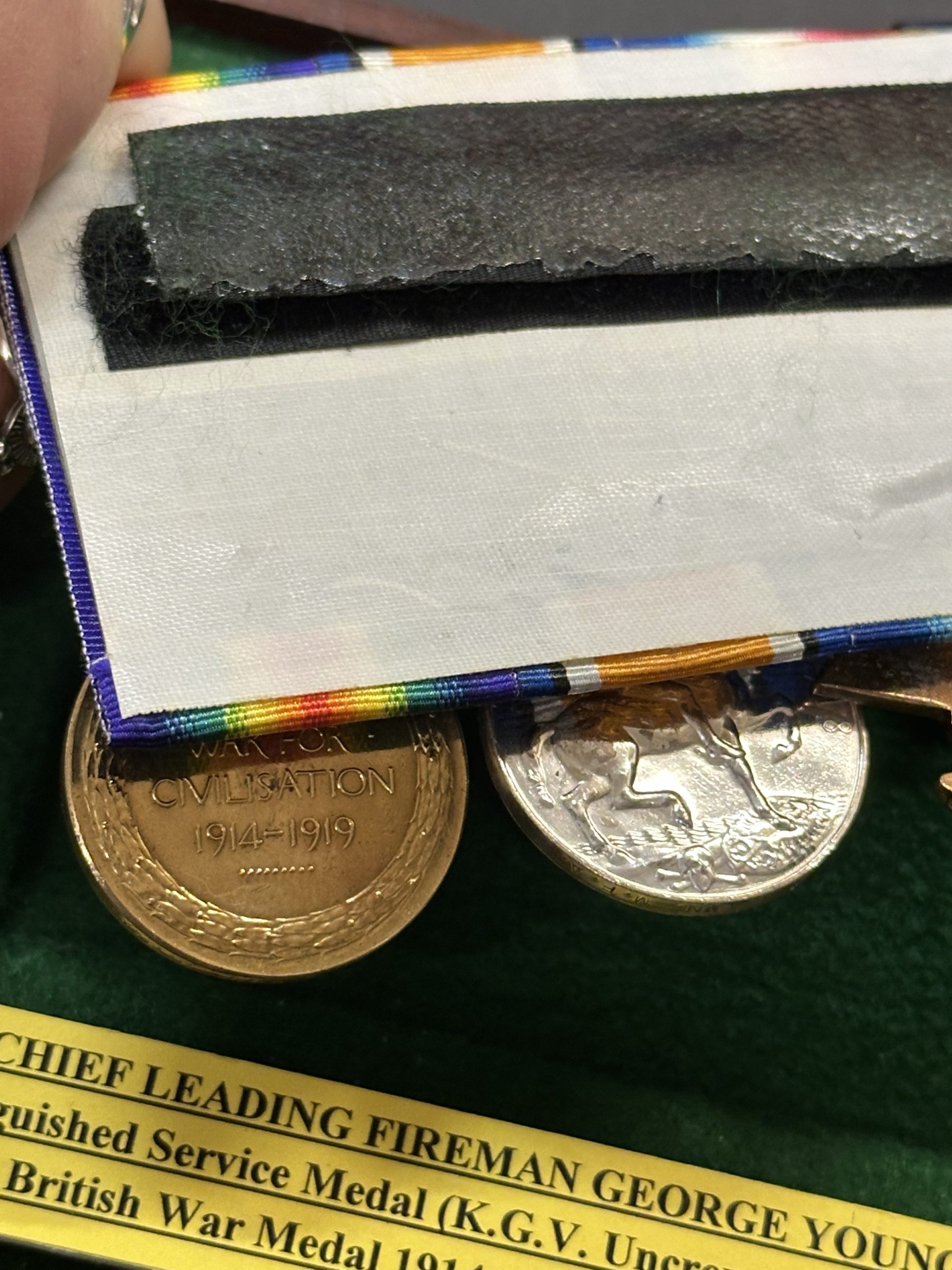
-Victory Medal G Youngs L FMN MFA
Mounted for display in an attractive wood and felt frame.
The 1911 census shows George then 29 years old living at 5 Vanguard Street, Deptford with his wife Madeline also 29 years old and their 2 children Amelia and George aged 4 and 2 years respectively. George is recorded as a ‘Seaman/Fireman’ on the census form. His DSM is recorded in the London Gazette no.30616 as being awarded for service in vessels of the Royal Navy between 1st January and 31st December 1917 whilst serving on H.M.S. Mantua, an armed merchant cruiser. The Mantua was built in 1909 for the P&O Shipping Company for the Australia service. On 5th August 1914 she was requisitioned by the Admiralty for service with the Royal Navy as an armed merchant cruiser. She was converted at Liverpool and fitted with eight 4.7″ guns and two 6 pounders and formally commissioned as H.M.S. Mantua into the Royal Navy 15th August 1914. She served initially in the Northern Patrol and then in 1915 as a troop ship. In 1917 she was stationed at Plymouth for duties as a Coastal Patrol and escort vessel between the UK and South Africa. During one of these patrols she was involved in an unfortunate maritime incident with The Quillota, a French, 3 masted sailing ship. On the 24th September 1917 she had sailed from St Nazaire for the Australian port of Freemantle. On 6th October she was sailing along the coast of Portugal in poor weather conditions, the lookout brought to the attention of the Officer of the Watch that he had sighted a large fast-moving steam ship heading directly towards them. In the poor weather conditions he considered it was probably an enemy ship and called his crew to battle stations. Both ships exchanged shell fire and The Quillota sustained damage to her hull and rigging and a fire erupted on the bow. The captain ordered the ship to be abandoned. When the unidentified ship approached the lifeboat the French were astonished to discover it was an armed British merchant cruiser H.M.S. Mantua. Both ships had mistakenly believed each other to be there enemy.
The incident had the ingredients of a serious diplomatic fall out between the British and French governments. However the Admiralty acted quickly to smooth over any difficulties accepting that H.M.S. Mantua had sunk the French sailing ship by gun fire mistaking her for a German raider. A court of enquiry was conducted by the Admiralty and French Naval Authorities at Dakar. The findings of the court acknowledged that both captains had made mistakes but the probability that H.M.S. Mantua’s captain was more at fault and a formal apology to the French over the sinking was submitted. During 1918 H.M.S. Mantua continued her war-time duties sailing between Cape Town and Sierra Leone. After the Armistice, she was decommissioned in 1920 and returned to P&O. Continuing her commercial service between the UK and Australia until 1935 when she was decommissioned.
Condition as shown in photographs


